Blind · low vision
The world is full of things no one labelled.
Which can is the soup? What's the expiry date? Navy shirt or black? Who's in this photo? Quick for a sighted person — slow, or impossible alone, otherwise. The goal isn't pity. It's doing ordinary things, independently.
— on independence, not inspiration
Feel it
Find the soup
You're making lunch. You have moderate low vision. Find the tomato soup on the shelf and tap it. (Sound on for the payoff.)
This is one rough approximation of a shelf seen with some kinds of low vision — everyone's vision differs. Try to pick out the soup.
A rough simulation of moderate low vision — everyone's vision is different. Press Begin when you're ready.
What it is
A wide range, not a single experience.
“Blind / low vision” spans a lot. Low vision means significant loss that glasses or surgery can't fully correct; blindness ranges from some light and shape perception to none at all. Most blind and low-vision people retain some usable vision, and the community generally uses plain, direct language — “blind,” “low vision” — not euphemism.
Daily life means a steady stream of small inaccessible moments sighted people never notice. Screen readers handle digital text well — but do nothing for the soup can, the room, or the handwritten note in front of you.
What people feel
Independence — and not having to ask.
The emotional thread is dignity: not wanting to ask for help with every label and letter, and the friction of a world built for eyes. Blind and low-vision people are clear they don't want pity or “inspiration” — they want access, and the tools to do things themselves.
There's a real gap for instant, private, on-demand description of whatever is physically in front of you — without waiting on a volunteer, or sharing your surroundings with a stranger.
By the numbers
The app
PicExplainer
Point your phone, hear what's there.
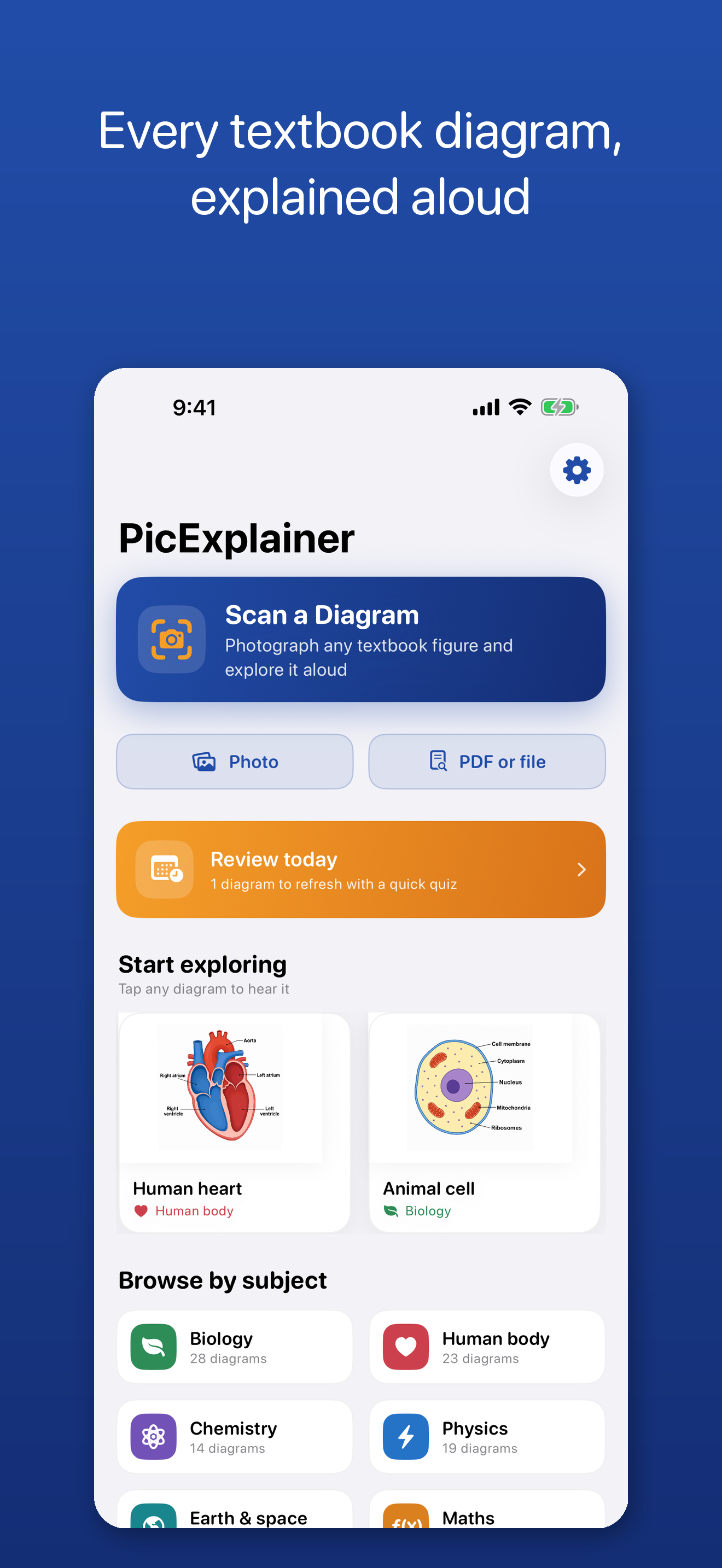
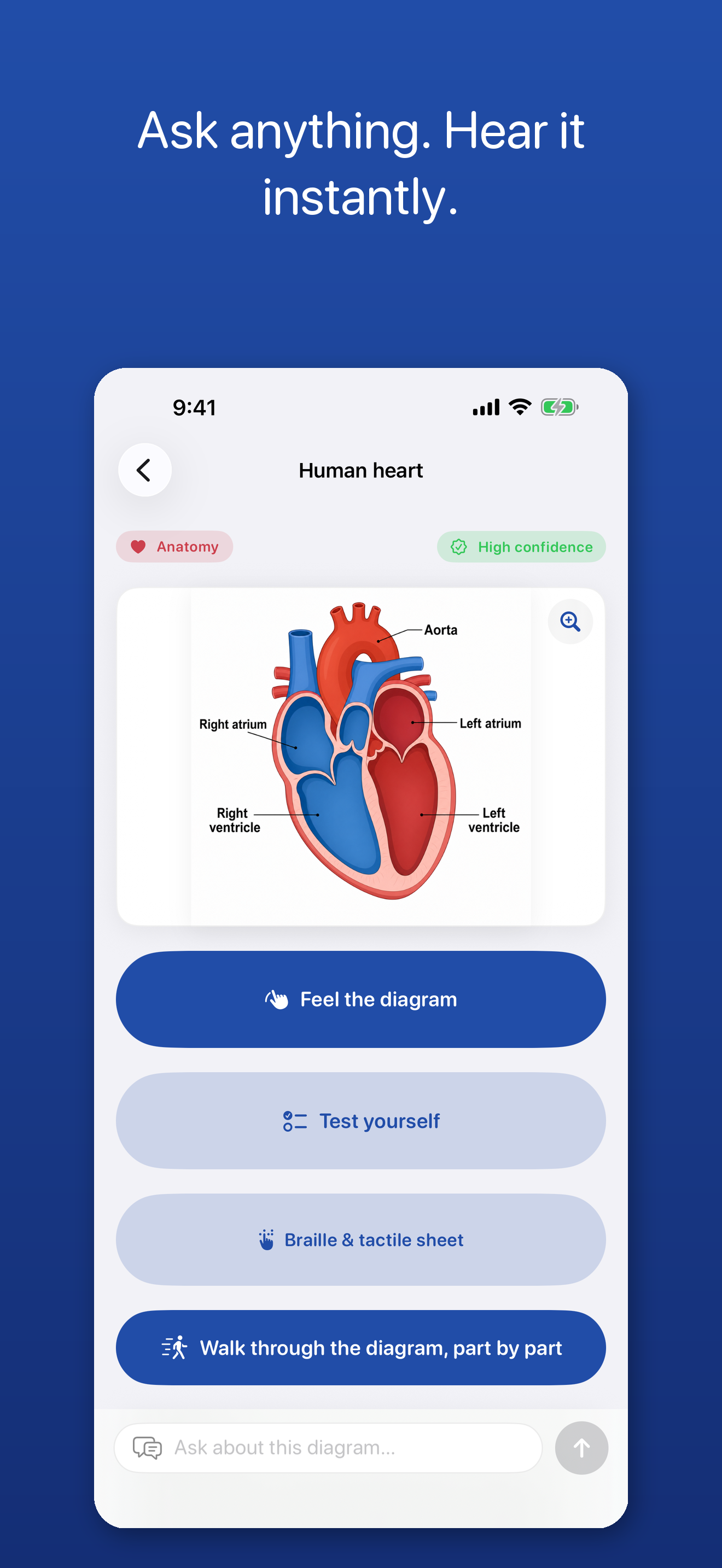
PicExplainer describes scenes, objects, and text aloud — built for the everyday inaccessible moments: reading a label, identifying an item, getting the gist of a photo or a room. On demand, independently, without waiting on another person. The framing is access and autonomy — never “overcoming.”
PicExplainer is an assistive tool for everyday independence. It is not a medical device and makes no claim to treat or restore vision.